
Scientific Skepticism in Canada
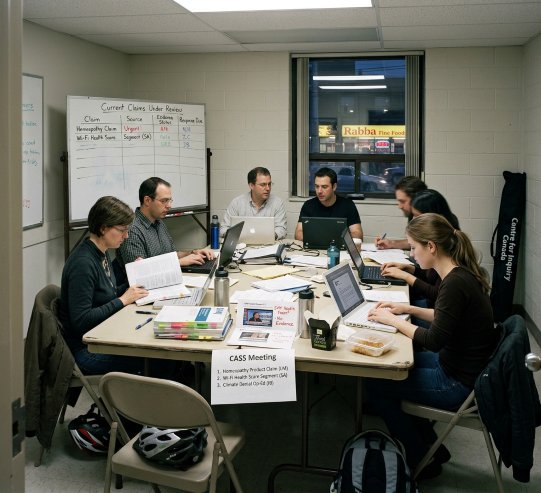
Picture four or five people on a weeknight call, each with a notebook, working through the transcript of a university lecture line by line and checking every claim against the published science. No funding, no staff, no press office. That is roughly what the Committee for the Advancement of Scientific Skepticism looked like, and it is why we wanted to write about them.
This is a short tour of what the group did and where the work went. We will say the obvious thing up front: we are not them. This is an independent site, not a channel for CASS or the Centre for Inquiry Canada. We just think their story is a good way into a bigger and more useful idea, which is how any of us can tell a solid claim from a shaky one.
“Extraordinary claims require extraordinary evidence.”
Carl Sagan, the line the modern skeptical movement keeps coming back to.

What We Mean by Scientific Skepticism
The word skeptic gets thrown around as an insult, but in this corner of the world it means something specific and worth keeping. A scientific skeptic does not reject ideas on sight. They ask what evidence backs a claim, whether it could be shown wrong, and whether anyone else gets the same result. The modern version of this traces back to a group founded in the United States in 1976, and it has since grown into national organizations around the world.
It helps to set it next to its lookalike. Plenty of people who reject settled science also call themselves skeptics, but they tend to start from the answer they want and keep only the evidence that fits. Here is the difference in plain terms.
| Aspect | Scientific skepticism | Science denial |
|---|---|---|
| Starts from | a question | a conclusion |
| Keeps evidence that | survives testing | fits the belief |
| Treats consensus as | a starting point | something to discredit |
| Open to being wrong | yes | no |
A Volunteer Team Called CASS
CASS started in 2010 as a working group inside the Centre for Inquiry Canada, the country’s main organization for science, reason, and secular inquiry. The setup was simple. Two co-chairs led a volunteer panel of experts and enthusiasts, and the whole point was to react fast when a dubious scientific or medical claim turned up in public.
The topics ranged widely:
- climate science
- homeopathy and alternative medicine
- Wi-Fi and EMF health scares
- evolution and creationism
- paranormal and fringe claims
A few moments stand out.
| Year | Milestone |
|---|---|
| 2009 | A campaign to hand out altered copies of Darwin on campuses sparks the idea |
| 2010 | CASS is founded within CFI Canada |
| 2011 | Two co-chairs set; first Skeptrack panel runs at Polaris 25 in Toronto |
| 2012 | Carleton climate report published, open letter sent to Shoppers Drug Mart |
| 2014 | The group’s work is folded into the CFIC board |
Three Cases Worth Knowing
If you only look at three things the group did, make it these. Each one has its own deeper write-up on this site.
The climate report. In 2012 the team sat through 27 hours of recorded lectures from a Carleton University course and published a 98-page response, answering 142 claims with citations to the literature. The instructor turned out to have deep ties to a US think tank known for disputing climate science.
Homeopathy on the shelf. In January 2012 they sent an open letter to Shoppers Drug Mart, asking the chain to stop selling homeopathic cold and flu products that, by their own design, contain none of the ingredient printed on the label.
How to check a claim. The same simple habit sits under all of it, and anyone can pick it up. We pulled it into a short, practical guide you can keep for the next time something dubious lands in your feed.
What Happened to the Group
CASS wound down as a separate committee in 2014, when the Centre for Inquiry Canada folded its work into the board. The group did not so much vanish as get absorbed. The parent organization built new committees on the same model and kept science as a core priority.
CFIC is still going. If you want the current version of this work rather than the history, that is where to look.
| Item | Detail |
|---|---|
| Status | Active (2025 to 2026) |
| Core focus | Scientific skepticism, critical thinking, secularism |
| Campaign | Is It Science, launched May 2019 |
| Newsletter | Critical Links (monthly), with a Science Check series |
| Podcast | Own the Science |
| Branches | Around 10 across Canada |
| President | Seanna Watson |
What this site is
We are an independent project. We are not affiliated with CASS, the Centre for Inquiry Canada, or any of the people named here. Where we mention their work, we link to their own material so you can read the source for yourself.
SOURCES AND FURTHER READING
- Centre for Inquiry Canada, Wikipedia entry, for the history of CASS. en.wikipedia.org/wiki/Centre_for_Inquiry_Canada
- CFIC on scientific skepticism and the Is It Science campaign. centreforinquiry.ca/scientific-skepticism
- CFIC current activities, newsletter, and podcast. centreforinquiry.ca
Disclaimer: This article is an independent informational overview. It is not affiliated with the Committee for the Advancement of Scientific Skepticism (CASS) or the Centre for Inquiry Canada. Organization names and links are provided so readers can consult the original sources.